
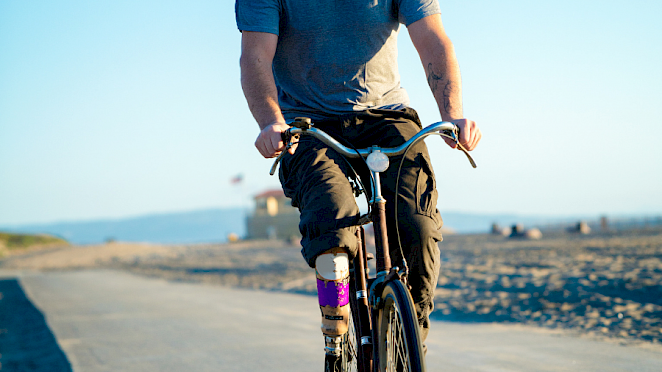
Summer is a great time to get outside, explore new activities, and stay active. For individuals living with an amputation, returning to hobbies like cycling may come with some challenges - but with the right prosthetic support and guidance, many people are able to enjoy the activities they love.
At Winnipeg Prosthetics & Orthotics (WinPO), our team of Certified Prosthetists works with individuals throughout Winnipeg (and Manitoba) to develop personalized prosthetic solutions that support mobility, independence, and active lifestyles.
Whether you are newly adjusting to life after an amputation or have been using a prosthesis for years, cycling can be a rewarding way to improve physical health, build confidence, and enjoy the outdoors.
Can you ride a bike with a prosthetic leg?
Yes. Many people with lower-limb amputations can ride a bicycle with the right preparation, equipment, and prosthetic support.
Cycling is a popular activity among many individuals with amputations because it is a low-impact exercise that places less stress on the residual limb compared to many other forms of physical activity. It can support cardiovascular health, strength, balance, and overall well-being.
However, every person’s situation is unique. Your level of amputation, prosthetic design, comfort, and cycling goals all play a role in determining what solutions will work best for you.
Working with a prosthetist can help you find the right approach to make cycling more comfortable, safe, and enjoyable.
How can a prosthetist help with cycling after an amputation?
Finding the right prosthetic setup is an important part of creating a comfortable and successful cycling experience.
Depending on your needs, you may be able to use your current prosthesis with adjustments to your bicycle. In other cases, modifications to your prosthesis may help improve comfort, control, and performance.
A prosthetist can help assess:
-
Prosthetic alignment and positioning
-
Comfort and pressure areas on the residual limb
-
Range of motion and cycling technique
-
Equipment adjustments needed for your specific activity
-
Whether a specialized prosthetic solution may be beneficial
At WinPO, our prosthetic team provides personalized prosthetic care in Winnipeg and works with individuals across Manitoba to support active lifestyles.
What bike pedals work best for people with an amputation?
Choosing the right pedal system is another important consideration when returning to cycling after an amputation.
Some options include:
-
Toe clips: These can help keep your foot positioned securely on the pedal.
-
Straps or Velcro systems: A simple and customizable option that can often be added to a standard bicycle.
-
Adaptive cycling equipment: Depending on your needs, specialized options may improve comfort, stability, and control.
The best option depends on your prosthesis, your level of mobility, and how you plan to use your bike.
Can upper-limb amputees ride bicycles?
Yes. Individuals with upper-limb amputations can also participate in cycling, although some bicycle adjustments may be needed.
Depending on the type of bicycle you use, modifications may include:
-
Adjusting handlebars for improved control
-
Moving brake controls so they can be operated from one side
-
Reconfiguring gear shifting systems
-
Exploring prosthetic options that support cycling activities
Your prosthetist can help determine what adjustments will provide the best combination of safety, comfort, and independence.
Tips for safe cycling after an amputation
Once you have found a setup that works for you, it is important to focus on safe cycling habits.
Some helpful tips include:
-
Start slowly and give yourself time to adjust.
-
Practice in a safe environment before riding in busy areas.
-
Be aware of road conditions, obstacles, and other cyclists.
-
Wear appropriate safety equipment, including a helmet.
-
Consider riding with a partner while building confidence.
Learning to cycle with an amputation may take patience and practice. Adjustments to your bike, prosthesis, or technique may be needed along the way — and that is completely normal.
How can I get help finding the right prosthetic solution for cycling in Winnipeg?
Returning to activities you enjoy after an amputation is an important part of rehabilitation and quality of life.
A prosthetist can help you explore options that support your personal goals, whether that means cycling, walking, working, or participating in other recreational activities.
At Winnipeg Prosthetics & Orthotics (WinPO), our Certified Prosthetists provide comprehensive prosthetic services in Winnipeg and throughout Manitoba. We work with each individual to create personalized prosthetic solutions designed around their lifestyle, mobility needs, and goals.
If you are interested in cycling with a prosthesis or want to learn more about your options, contact our team to discuss.